Pool Chemistry in Summer: Fethiye Villa Guide | NEW GENERATION
13 JUNE 2026
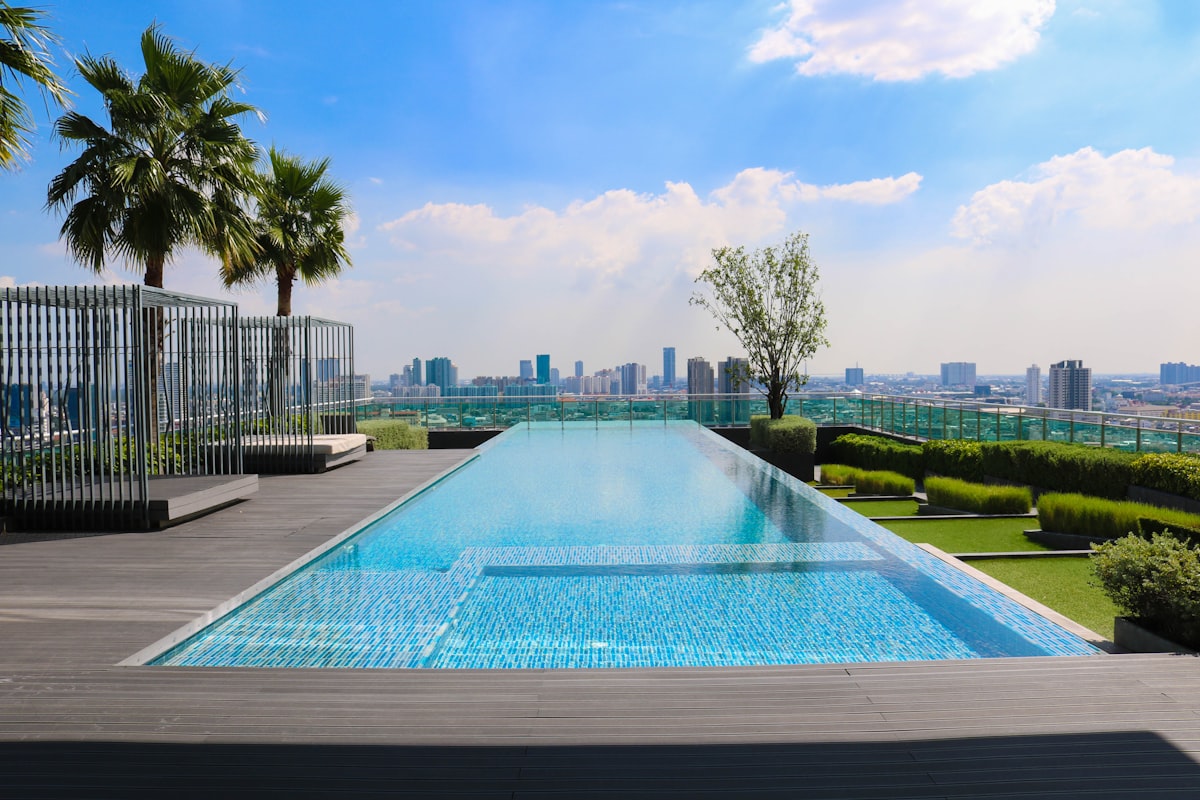
Maintaining a swimming pool in northern Europe and maintaining one in Fethiye in July are not the same exercise. The temperature difference alone — a pool environment that regularly exceeds 40 degrees air temperature through the peak summer months — creates chemical dynamics that require a different approach to dosing, testing and management. For villa owners on the Fethiye coast, understanding what heat does to pool water is the first step toward keeping a pool safe, clear and in good condition.
How Heat Changes Pool Chemistry
High ambient temperatures accelerate almost every chemical process in a swimming pool. Chlorine degrades significantly faster in hot conditions — at 30 degrees it dissipates at roughly twice the rate it would at 20 degrees. At 40 degrees air temperature with direct sun exposure, the effective life of a chlorine dose can be a matter of hours rather than days. A dosing schedule that keeps a pool clean in May can be completely inadequate in July. Algae grows rapidly in warm water with insufficient sanitiser, and the characteristic green tint of an unbalanced pool in high summer indicates a water quality failure that poses genuine health risks to swimmers.
pH Balance in Hot Conditions
High water temperatures combined with evaporation rates typical of a Mediterranean summer cause pH to drift upward more rapidly than in cooler climates. As pH rises above the effective range, the efficiency of chlorine as a sanitiser falls dramatically — even if chlorine levels appear adequate on a basic test. Accurate, multi-parameter testing carried out at least twice weekly during peak summer is the only reliable way to maintain safe water quality. This is why visual inspection and single-parameter testing are insufficient in a high-temperature environment.
Stabiliser and UV Protection
Most outdoor pools use stabilised chlorine products containing cyanuric acid, which protects chlorine from UV degradation in direct sunlight. In the intense UV environment of a Fethiye summer, this protection is essential. However, cyanuric acid levels that climb too high begin to inhibit chlorine effectiveness — a condition that requires partial water changes to dilute accumulated stabiliser.
Filtration and Circulation
In peak summer conditions, pool filtration systems need to run longer — typically 10 to 12 hours in July and August compared to 6 to 8 hours in spring. Filter media should be cleaned or backwashed regularly, and the condition of pump seals and fittings should be checked periodically as heat accelerates wear.
Professional Pool Maintenance in the Fethiye Region
For villa owners who are not present at their properties through the summer, or who rent their properties to guests, reliable professional pool maintenance is essential. A pool that is not properly managed in Fethiye summer conditions can fail quickly and be genuinely difficult to recover without full draining and treatment. NEW GENERATION Property Services provides pool maintenance services across the Fethiye coast. Contact our team to discuss a pool maintenance programme for your property.
Recent Posts